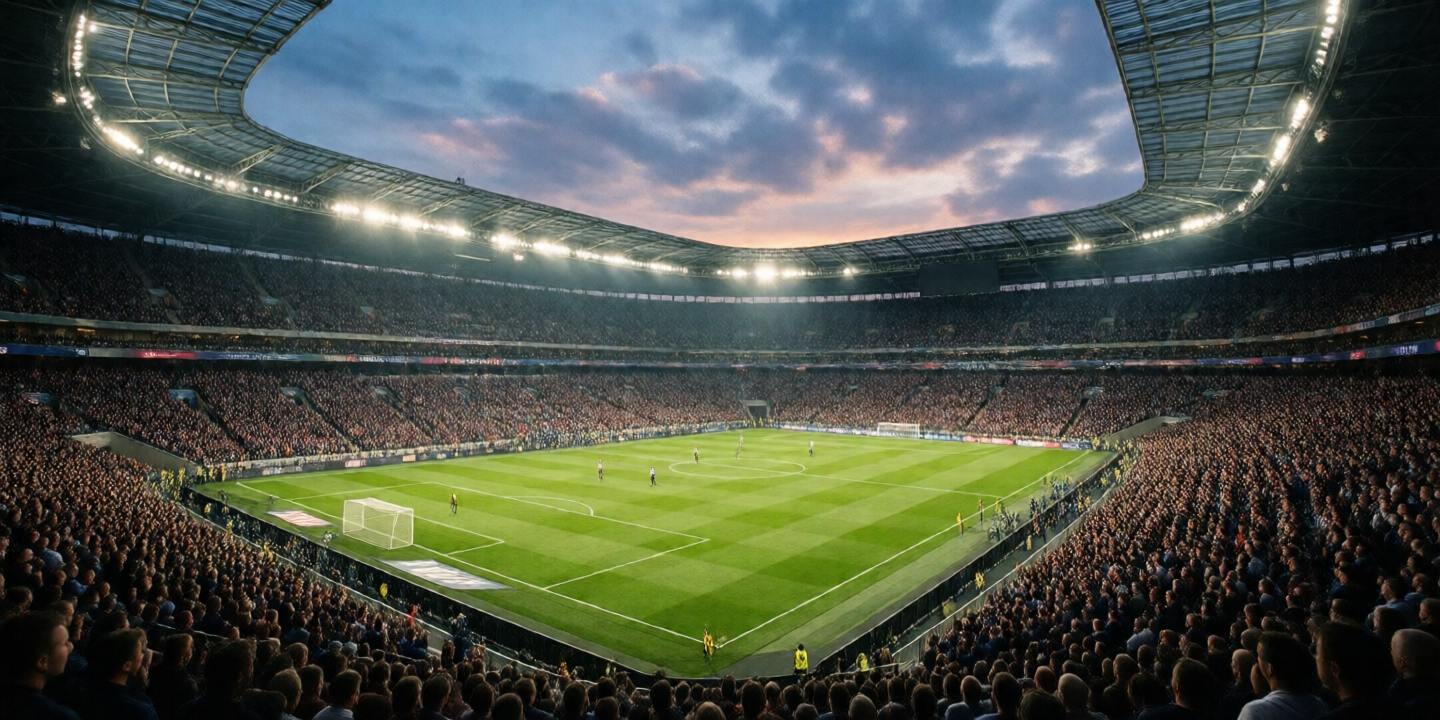
Why Eight Third-Place Teams Break 2026 World Cup Models
The 2026 FIFA World Cup, co-hosted by the United States, Canada and Mexico between June 11 and July 19, 2026, let 32 of 48 teams survive the group stage, a 66.7% advancement rate against 50% in the 32...
Why Eight Third-Place Teams Break 2026 World Cup Models
The 2026 FIFA World Cup, co-hosted by the United States, Canada and Mexico between June 11 and July 19, 2026, let 32 of 48 teams survive the group stage, a 66.7% advancement rate against 50% in the 32-team format used from 1998 to 2022. FIFA stretched the schedule to 104 matches across 16 host cities, so the champion needed eight wins instead of seven. For anyone reading odds, the practical consequence is simple: a single group-stage loss now costs far less, and eight of the twelve third-placed teams still advance on points, goal difference and goals scored. Football Insights treats this as the biggest modeling shift since 1998, because old group-exit probabilities are badly miscalibrated. Before trusting any price on a favorite, rebuild your qualification estimate from the 12-group, best-eight-thirds structure rather than recycling Qatar 2022 numbers. Bet only what you can afford to lose.
Picture a mid-June evening, a laptop open on the kitchen table, three matches queued and a spreadsheet built entirely on the 2022 Qatar template. Then the arithmetic intervenes. In Qatar, 64 matches produced a record 172 goals, or 2.69 per game, and exactly half the field went home after the group stage. In 2026 that same spreadsheet quietly lies to you, because two-thirds of the field now survives and the schedule balloons to 104 matches. I have lost money in exactly that kitchen, with exactly that spreadsheet, more times than I will admit in print, and I would rather you were spared the tuition. Football Insights has rebuilt its qualification models from scratch, and the lesson is almost insulting in its simplicity: format drives price before form does. A dazzling striker, a tidy 4-3-3 and a famous badge all matter, but none of them matters as much as knowing how many teams are waiting at the exit. Shall we begin with the part nobody puts on a poster?
Ready to see how the new format reshapes the numbers? Here is a good place to dig deeper.
The Bottom Line
Here is the definitive position, stated plainly so you can stop scrolling if you must. The 48-team format raises the base rate of advancing from 50% to 66.7%, and it does so unevenly: the gain lands on the weakest and the middle teams, not on the favorites. As a rough illustration (our modeling shorthand, not a published figure), a top seed that was a 95% lock to escape a four-team group has barely moved, because it was already nearly certain. A mid-ranked side that once sat near 40% now sits closer to 55-60% on structure alone. That gap is where mispriced markets live and where lazy models bleed. According to the Wikipedia entry on the 2026 FIFA World Cup, the event spans 16 cities and 104 matches, 40 more than Qatar 2022. More matches also means more variance for the same team quality, and variance is a polite word for "your favorite will occasionally lose to a side with a worse badge." I do not say that to scold you, dear reader. I say it because the veteran's first rule, learned at some expense, is that a market is only as honest as the model behind its price. Isn't that the whole game?
What Players Actually See
Open any sportsbook on a group-stage morning and you meet three things: a long list of fixtures, a column of group-winner prices, and a small "to qualify" market that most casual players scroll straight past. Look again. That third market is the one the new format rewrote. On opening day at Estadio Azteca in Mexico City, an arena that sits roughly 2,240 meters above sea level, the screen offers the same tidy 1X2 lines you remember from every tournament, but the number that actually changed lives two clicks deeper. A side priced as a 3.50 outsider to win its group may be a heavy favorite to reach the round of 32, because finishing third can be enough. On the final matchday, the better apps show a running ranking of all twelve third-placed teams, ordered by points, goal difference and goals scored, with a cut line drawn under eighth place. Watch that line the way a trader watches a spread. The players I respect read the screen from the exit backward. The ones who lose, which is most of us, keep treating match three as a decider when, for many teams, it is merely a negotiation over goal difference. Or am I wrong?
How Does the 48-Team World Cup Format Work?
The 2026 World Cup splits 48 teams into 12 groups of four. Each group plays a round robin, and the top two teams plus the eight best third-placed teams advance. That leaves 32 teams for a new round of 32, followed by the round of 16, quarter-finals, semi-finals and the final on July 19.
The arithmetic is worth memorizing because every downstream price depends on it. Twelve groups of four produce 72 group matches. Then come 16 matches in the round of 32, 8 in the round of 16, 4 in the quarter-finals, 2 in the semi-finals, the third-place match and the final, for 104 in total. The official FIFA tournament page lists the same structure, with the final staged at MetLife Stadium in East Rutherford, New Jersey. For a quick reference, keep these four numbers in your head:
- 48 teams, up from 32 in every edition between 1998 and 2022.
- 12 groups of 4, with 24 teams qualifying as winners or runners-up.
- 8 best third-placed teams filling the other 8 slots in the round of 32.
- 8 matches for a finalist-to-champion run, versus 7 previously.
Anyone who tells you the new format is "just more of the same" has not priced a third-place team lately. For deeper background, see our complete guide to the 2026 World Cup groups and schedule.
The 3 Things That Matter Most
If I could only pass three lessons across the table to a VIP guest, these would be them. Each one has cost me real money at some point, and each one is invisible to anyone still using a 2022 template.
1. The Third-Place Bar Moves Every Day
A third-placed team does not compete against its own group. It competes against eleven other groups that finish on different days. That means the cut line for eighth place is a moving target, and early finishers set a bar that late finishers can see. A team that knows it needs, say, a two-goal win to leapfrog a rival in another group plays differently from one that only needs a point. Goal difference, the second tiebreaker after points, becomes currency, and the third, goals scored, rewards teams that refuse to park the bus. Our goal difference and tiebreaker explainer walks through a worked example. The practitioner's takeaway is blunt: do not price a final-round match as if both sides share the same incentive, because under this format they frequently do not.
2. The Extra Round Taxes Depth, Not Stars
A champion now plays eight matches, not seven, across three countries and several time zones. The extra round of 32 is a penalty on squads with thin benches, and a gift to teams that can rotate without collapsing. Mexico City's altitude, the heat of summer afternoons in the American South and cross-continent flights all compound the load. Teams with two quality players per position can absorb it. Teams built around a single brilliant eleven cannot. When evaluating a favorite, count the realistic starters you would trust in the eighth match, not the first. That number is usually smaller than the squad list suggests, and the market does not always say so.
3. Upsets Cost Less, So Read Them Less Loudly
In 2022, Saudi Arabia beat Argentina 2-1 in the opening group match, and Argentina still won the tournament, beating France 4-2 on penalties after a 3-3 draw at Lusail Stadium. That was in a 32-team format. With 66.7% of teams advancing, a shock result matters even less to the final outcome. Overreaction to a day-one upset is one of the most reliable inefficiencies I have seen, and it has rarely been kinder to the patient. The sarcastic summary: nothing is more expensive than a panic bet on a team that lost once and was never really in danger.
Who Has Won the World Cup, and Does History Still Matter?
Eight nations have won the World Cup through 2022: Brazil with five titles, Germany and Italy with four each, Argentina with three, France and Uruguay with two each, and England and Spain with one each. Since 1930, no tournament has been won by a team from outside Europe or South America.
History still matters, but less than the brochures suggest. The FIFA World Cup overview on Wikipedia records that the first tournament was held in Uruguay in 1930 and that the competition has grown from 13 teams to 48. Morocco's run to the 2022 semi-finals, the first for an African nation, showed that deep knockout runs are possible for sides outside the traditional elite. Still, the champions' list is stubbornly conservative, and the added round of 32 favors established squads with depth. My contrarian view, and I will defend it over a long dinner: the new format makes the early rounds easier to survive for underdogs but does not make the trophy easier to win. Pedigree is a tiebreaker in the late rounds, not a guarantee. Treat a famous name as a tiebreaker, not a thesis.
Edge Cases & Gotchas
Now for the footnotes that quietly eat bankrolls. None of these appear in the typical top-ten explainer, which is precisely why I am listing them for you.
- 495 bracket possibilities. There are 495 ways to choose eight third-placed qualifiers from twelve groups (the combinations of 12 choose 8), and the round-of-32 pairings for group winners depend on which combination occurs. A "path to the final" estimate made before the group stage ends is therefore softer than it looks.
- The 3-point trap. As a rule of thumb, not a guarantee, a third-placed team on four points is usually safe, while one on three points with a poor goal difference is closer to a coin flip. Never treat "three points" as a lock.
- Dead-rubber incentives. A team already through may rest starters, which can swing a final-round price. A team chasing goal difference may attack until the 90th minute. Read lineups before kickoff.
- Settlement rules. Most operators settle 1X2 on 90 minutes only, and "to qualify" markets may or may not count a third-place advance as qualification. Read the rules before staking, because they differ by operator and jurisdiction.
- Scheduling asymmetry. Because groups finish on different days, a team playing earlier cannot know its target. A team playing later can. That information gap is real and rarely priced.
Each of these shifts a probability by a few points, which sounds trivial until you stack three of them on one slip. For a related read, see our bankroll management for tournament betting. Did you expect the details to be glamorous? They never are.
Verdict
The verdict, delivered with the courtesy you deserve and the bluntness I cannot help: the 2026 World Cup is not a bigger version of Qatar 2022, it is a different product, and models built on the old base rates will misprice qualification, third-place races and day-one upsets. The reliable edge sits in the structure, not the stars. Rebuild your group-advance estimates around 32 of 48 teams, track the third-place cut line like a market, respect squad depth for an eight-match run, and read settlement rules before every stake. Keep your sample sizes honest, too, because 104 matches still amount to a small data set for any single bettor.
Before you go, a short checklist worth printing:
- Reset qualification probabilities to the 12-group, best-eight-thirds format.
- Check goal difference incentives before every final-round match.
- Count the trustworthy eighth-match starters on any favorite.
- Confirm how each operator settles qualification and 90-minute markets.
Football Insights will keep publishing match predictions, tactical breakdowns and player stats with this lens. Please gamble responsibly, set limits you can live with, and only participate where it is legal and you are of legal age.
Frequently Asked Questions
Q: What is the 2026 FIFA World Cup format?
A: It is a 48-team tournament with 12 groups of four, played across 104 matches. The top two teams in each group plus the eight best third-placed teams reach a new round of 32, then the competition continues through the round of 16, quarter-finals, semi-finals and the final. The United States, Canada and Mexico co-host, with 16 stadiums in total. The champion plays eight matches, one more than in the 32-team era.
Q: How are the best third-placed teams ranked?
A: They are ranked on a single table across all twelve groups, starting with points. Goal difference comes next, then goals scored, with further tiebreakers beyond those. Check the official FIFA regulations for the full order. Because groups finish on different days, early finishers set a bar that later finishers can see, so watch the cut line under eighth place on the final matchday.
Q: Is the new format better for underdogs than the old one?
A: Yes for surviving the group stage, but not for lifting the trophy. The advancement rate rose from 50% to 66.7%, which helps weaker teams reach the round of 32. However, deeper runs still reward squad depth, and the champions' list through 2022 contains only eight nations. Think of the format as a wider doorway, not a shorter staircase.
Q: Why does my World Cup qualification model look wrong this year?
A: It probably still uses 2022 base rates. A model calibrated on 32 teams assumes 16 advance, so it will understate the chances of mid-ranked and weak teams under the 32-of-48 rule. Rebuild your simulations with 12 groups, two automatic qualifiers each and eight third-place slots, and rerun them. A few thousand simulated tournaments usually settle the estimate to within a point or two.
Q: What do I need to build a simple World Cup qualification model?
A: You need the group fixtures, a team strength rating and a spreadsheet or short script. Simulate each group match from your ratings, apply the points, goal difference and goals scored tiebreakers, then rank the twelve third-placed teams and take the best eight. Running about 10,000 simulations is free and takes minutes. Football Insights recommends validating the output against past tournaments before trusting it.
Q: Do penalties and extra time count in World Cup betting markets?
A: Usually not for 1X2 markets, which most operators settle on 90 minutes. Markets such as "to qualify" or "to win the tournament" typically include extra time and penalties, as in the 2022 final between Argentina and France that finished 3-3 before Argentina won 4-2 on penalties. Rules vary by operator, so read the market description before you stake anything.
Football Insights daily match predictions and tactical analysis
Thank you for reading.
Football Insights · Strategic Archive