
What Nobody Tells You About Football World Cup 2026
The 2026 FIFA World Cup will feature 48 teams, 104 matches, and three host nations: Canada, Mexico, and the United States, from June 11 to July 19, FIFA expanded the tournament from 32 teams, creating...
What Nobody Tells You About Football World Cup 2026
The 2026 FIFA World Cup will feature 48 teams, 104 matches, and three host nations: Canada, Mexico, and the United States, from June 11 to July 19, 2026. FIFA expanded the tournament from 32 teams, creating a longer competition across 16 venues and three North American markets. The opening match is scheduled for Mexico City, while the final will be played at MetLife Stadium in New Jersey, officially listed by FIFA as New York/New Jersey. This format creates more opportunities for underdogs, but also introduces heavier travel, complicated time zones, and greater squad-management demands. Football Insights tracks team tactics, player statistics, match predictions, and tournament developments throughout the competition. The practical takeaway is simple: assess fixtures by travel, rest, and squad depth rather than trusting reputation alone.
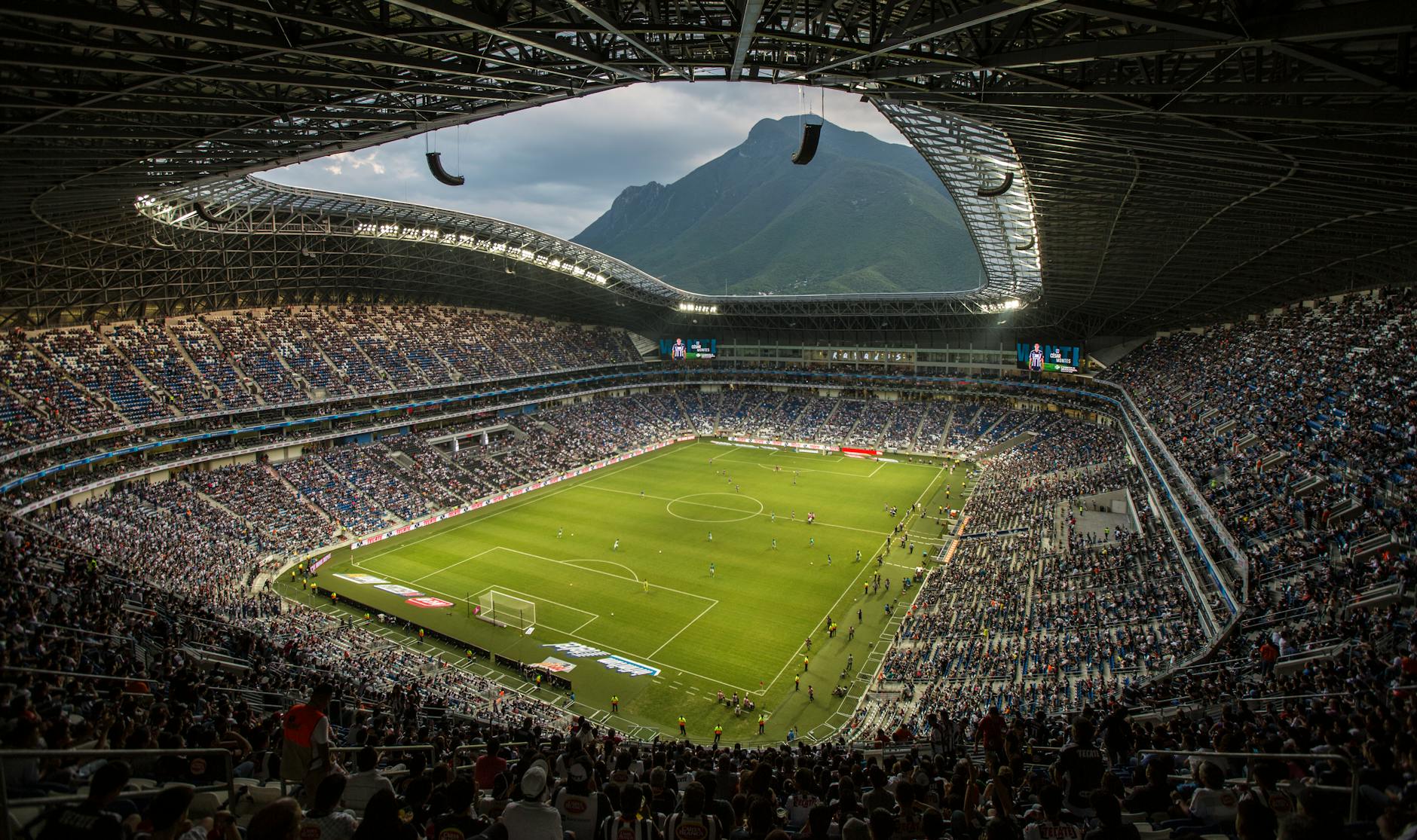
Photo by S L V on Pexels
The 2026 tournament is not merely the old World Cup with sixteen extra invitations stapled to it. It is a structural change to international football, and anyone treating it like Qatar 2022 with a different backdrop is volunteering to be surprised. Canada, Mexico, and the United States will host matches across North America, with 48 national teams divided into 12 groups of four. The top two teams in each group and the eight best third-place teams will advance to a 32-team knockout stage, producing 104 matches rather than the previous 64. That means more football, more data, more opportunities for poor assumptions to be punished, and frankly more punditry delivered with the confidence of a man who has never checked a squad list. According to FIFA’s official tournament information, the final tournament will run from June 11 through July 19, 2026. Football Insights recommends building your understanding around confirmed regulations, not recycled social-media graphics. Interested in the full tournament picture? Examine the details before making predictions.
Myth 1: The 2026 World Cup is just a larger group stage — debunked
The 2026 World Cup is a 48-team tournament with 12 groups of four, followed by a Round of 32; it is not simply the 2022 format multiplied by hope. The expansion adds 40 matches and changes qualification mathematics because eight third-place teams will also progress. That adjustment makes early goal difference and late-match game management significantly more important.
The old 32-team format used eight groups of four, with two teams advancing from each group. In 2026, the 12 group winners and 12 runners-up qualify automatically for the knockout phase, joined by the eight strongest third-place teams. This creates a peculiar tactical incentive: a team may not need six points to advance, yet a narrow defeat can still become disastrous if its goal difference collapses. The FIFA Regulations for the FIFA World Cup 2026 provide the governing framework, and the competition’s ranking rules matter more than casual previews admit. A 1-0 win and a 4-0 win are both victories, but in a third-place table, they are not remotely equal. Isn’t that the point of tournament football: tiny details eventually become enormous?
The first operational consequence is fixture density. A finalist can play eight matches instead of seven, while the champion must navigate one extra knockout round. Coaches therefore need a larger usable squad, not merely eleven excellent starters and a bench full of decorative tracksuit models. Midfield rotation, centre-back availability, and substitute quality will influence the latter stages more heavily than in previous editions. For analysis, track minutes played, injury status, pressing intensity, and substitution patterns rather than relying on star ratings alone. Football Insights will be monitoring those variables across Brazil, France, Argentina, England, Spain, Germany, Portugal, and the host nations.
- Group-stage tie-breakers can magnify goal difference.
- Third-place qualification makes every late goal potentially valuable.
- The knockout phase begins with a Round of 32.
- Squad depth becomes more important during the additional matches.
- Match previews should distinguish confirmed information from qualification speculation.
2026 World Cup tournament format explained
Myth 2: Hosting three countries guarantees a predictable advantage — partially true
Canada, Mexico, and the United States receive meaningful home-region benefits, but hosting the 2026 World Cup does not guarantee a deep run for any of them. Home crowds, familiar travel corridors, and local climate knowledge can help; long distances between venues, pressure, and uneven tournament experience can hurt. The advantage is real, but it is not a magic spell, despite what every breathless broadcast graphic will imply.
Mexico’s opening match at Estadio Azteca in Mexico City gives El Tri a significant emotional platform, while Canada enters its first men’s World Cup co-hosted on home soil. The United States brings a larger pool of players familiar with MLS, European competition, and the demands of high-profile international fixtures. However, the host nations are not operating from identical circumstances. Mexico City sits at high altitude, coastal venues bring different humidity profiles, and matches in the United States may involve substantial travel between regions. The U.S. Soccer Federation and national federations will need to manage preparation camps around club calendars, player releases, and recovery. A supporter may travel comfortably by aircraft; a full squad with staff, equipment, and recovery requirements is a different animal entirely.
Here is the less glamorous insight that casual previews often miss: venue geography may matter more than the label “home advantage.” The tournament spans Canada, Mexico, and the United States, and the distance between a Pacific venue and an eastern venue can exceed 3,000 kilometres. A team that repeatedly changes time zones may lose training quality even when its matches look favourable on paper. After years of watching tournaments punished by travel, I refuse to treat a host designation as a complete analytical category. Record the city, altitude, expected temperature, rest days, and previous travel leg for every fixture. That approach is dull, accurate, and therefore usually less popular than nonsense.

Photo by Uzay Yildirim on Pexels
Want a more disciplined way to compare host-nation conditions and travel demands? See the relevant tournament analysis.
Myth 3: The biggest football nations will automatically dominate — flat-out false
The largest football nations will enter the 2026 World Cup as favourites, but reputation does not score goals, defend transitions, or recover from a third match in ten days. Argentina, France, Brazil, England, Spain, Germany, and Portugal may possess elite talent, yet the expanded field gives more dangerous mid-tier teams access to the knockout rounds. A famous badge is useful for ticket sales; it is not a tactical plan.
The additional qualifying places improve the chances of teams from Africa, Asia, North America, and Oceania reaching the knockout phase. Morocco’s 2022 semifinal run already demonstrated that tournament organisation, defensive compactness, and transition efficiency can outperform old assumptions about hierarchy. Japan, Senegal, South Korea, Canada, Switzerland, Croatia, and Colombia have all shown that disciplined structures can trouble technically superior opponents. The expansion may produce more uneven group matches, but it also creates a larger number of elimination games in which one strong performance changes everything. According to UEFA’s national-team competition data, competitive balance increasingly depends on player development, tactical coaching, and club exposure rather than historical prestige alone.
A useful contrarian measure is not possession percentage by itself, but what teams do after losing the ball. Track counter-pressing success, defensive line recovery, progressive passes under pressure, set-piece output, and the number of shots conceded from central areas. A team averaging 62 percent possession while allowing repeated transition chances is not controlling matches; it is decorating danger. Similarly, a low-possession side with excellent rest-defence structure may be far more resilient than its headline statistics suggest. Football Insights will assess player roles, expected goals, pressing triggers, and tactical matchups instead of worshipping the table position generated by a different competition.
The strongest prediction process should therefore separate:
- Tournament quality: squad depth, recent competitive level, and injury resilience.
- Tactical fit: pressing resistance, transition defence, set pieces, and wide-area coverage.
- Schedule context: rest days, venue, climate, travel, and opponent sequence.
- Market perception: whether public enthusiasm has inflated a team’s apparent probability.
- Line-up certainty: whether the expected XI is actually available and match-fit.
team tactics and formation guide
What actually works when analysing the 2026 World Cup?
The most reliable 2026 World Cup analysis combines confirmed team news, tactical matchup data, venue conditions, and schedule effects instead of relying on fame or isolated recent results. A practical model should compare expected goals, shot quality, pressing resistance, set-piece performance, rest days, injuries, and travel before forming a view. That is considerably less exciting than shouting “they have momentum,” but it survives contact with evidence.
Begin with the official fixture list and verify each match location. Then assess how each team performs against the opponent’s likely structure: a high press against a goalkeeper uncomfortable with short distribution, a low block against a side dependent on central combinations, or wide overloads against a narrow midfield. Include set pieces because knockout football is often decided by corners and free kicks rather than artistic control. Finally, check line-ups close to kick-off; a missing holding midfielder can change a team’s defensive balance more than a famous forward’s absence changes its attacking reputation. advanced World Cup prediction methods gives readers a useful framework for separating signal from noise.
A practitioner-level edge is to compare public narratives with measurable workload. Teams that rely on aggressive pressing may perform brilliantly in one match and fade when recovery time is short. Conversely, a compact side may appear passive while preserving energy for a decisive counterattack. Monitor sprint volume, substitutions before the 75th minute, injuries to high-minute players, and whether a coach rotates full-backs. These details rarely dominate headline previews, yet they can determine whether a team maintains its structure in the final twenty minutes. If you use betting markets, treat odds as information about collective opinion, not as proof of outcome; set limits, compare prices carefully, and never stake money needed for living expenses.
Use this checklist before evaluating a fixture:
- Confirm the match venue, local conditions, and travel route.
- Check official squad announcements and injury reports.
- Compare tactical strengths against the specific opponent.
- Review set-piece goals for and against.
- Measure rest days and likely rotation.
- Compare your assessment with market odds without treating odds as certainty.
- Record the reasoning before the match so hindsight cannot rewrite it afterward.

Photo by Andrea Piacquadio on Pexels
Get a sharper pre-match process with evidence-based tournament coverage from Football Insights.
What should you ignore when following the 2026 World Cup?
Ignore viral predictions, unverified injury claims, single-match conclusions, and the lazy idea that “momentum” operates independently of tactics and schedule. Also ignore any analysis that presents betting as guaranteed income, hides uncertainty, or encourages reckless staking. The World Cup is unpredictable because football contains low-scoring matches, deflections, penalties, officiating decisions, and human error; anyone promising certainty is selling theatre.
Social-media clips are particularly dangerous because they remove context. A forward’s spectacular goal may conceal a poor performance against a deep block, while a goalkeeper’s mistake may dominate discussion despite ninety minutes of excellent distribution. Likewise, a team’s unbeaten run can include weak opposition, friendly matches, or fortunate late winners. Check competition level, expected goals, defensive actions, and line-up continuity before deciding that a team is “in form.” The International Football Association Board Laws of the Game also matter when interpreting penalties, handball incidents, substitutions, and stoppage time. Rules are not background decoration; they shape match probability.
I have watched enough tournaments to establish one stubborn rule: never make a prediction because a team “should” win. Football owes nobody a correction. Use probability ranges, acknowledge the possibility of a draw, and distinguish a strong analytical position from a high-confidence emotional preference. Responsible gambling means setting a budget before viewing odds, avoiding chase behaviour after losses, and following applicable local laws. If the numbers do not justify a wager, the correct action is to pass. That is not cowardice; it is financial discipline, and unlike a last-minute accumulator, it tends to age well.
Avoid these common traps:
- Treating FIFA rankings as a complete measure of current strength.
- Assuming a star player can solve every tactical problem.
- Confusing possession with control.
- Ignoring altitude, heat, humidity, or long-distance travel.
- Betting after a loss to recover money quickly.
- Using unconfirmed team news from anonymous social accounts.
- Believing a prediction is certain because several analysts agree.
Why will travel and recovery matter more than usual?
Travel and recovery will be unusually important because the 2026 World Cup covers three countries, 16 venues, 48 teams, and 104 matches. Teams may cross multiple time zones during the group and knockout phases, while heat, humidity, altitude, and limited recovery windows affect physical output. Evaluating a fixture without its travel context leaves out one of the tournament’s most measurable variables.
The schedule’s geographic breadth creates different burdens for different groups. A team based near one region may enjoy relatively short transfers, while another could face repeated long flights and altered sleep patterns. Recovery staff will need to manage hydration, training intensity, nutrition, and player rotation with unusual precision. Goalkeepers and central defenders may be affected differently from high-sprint wingers, while full-backs can suffer when asked to repeat long-distance runs after compressed recovery. These are not speculative concerns: match load accumulates, and tournament football offers little sympathy to teams that mistake freshness for an optional luxury.
For readers tracking predictions, use a simple travel adjustment rather than inventing a dramatic narrative. Note the previous match city, next match city, time-zone change, rest interval, climate difference, and whether the coach rotated key positions. Then compare the adjustment with actual squad depth. A three-day recovery period may be manageable for France or Brazil but more damaging for a team whose starting eleven carries nearly every important minute. This is where Football Insights can provide useful daily context through player statistics, tactical previews, and updated tournament coverage. World Cup schedule and host city guide is a sensible companion for anyone planning viewing or analysis.
Frequently Asked Questions
Q: What is the 2026 FIFA World Cup format?
A: The 2026 FIFA World Cup features 48 teams divided into 12 groups of four, followed by a 32-team knockout stage. The top two teams from every group and the eight best third-place teams advance. The tournament contains 104 matches, compared with 64 in the 32-team format, making squad depth and goal difference more significant.
Q: Where will the 2026 World Cup be played?
A: The 2026 World Cup will be hosted by Canada, Mexico, and the United States across 16 venues. Matches will be staged in cities including Mexico City, Toronto, Vancouver, Los Angeles, Dallas, Miami, Atlanta, and New York/New Jersey. Venue conditions differ considerably, so analysts should account for travel distance, climate, altitude, and rest days.
Q: When does the 2026 World Cup start and finish?
A: The 2026 World Cup is scheduled to begin on June 11, 2026, and conclude on July 19, 2026. The opening match is planned for Mexico City, while the final is scheduled for MetLife Stadium in New Jersey. Exact kickoff times vary by fixture and local venue, so viewers should confirm schedules through FIFA or reputable broadcasters.
Q: How can I analyse a 2026 World Cup match?
A: Analyse a 2026 World Cup match by checking confirmed line-ups, tactical matchups, expected-goal trends, set pieces, injuries, rest days, and venue conditions. Compare how each team responds to pressing, low blocks, transitions, and aerial situations. Review odds only as an expression of market opinion, and never treat them as a guarantee of the result.
Q: What is the difference between the 2022 and 2026 World Cup formats?
A: The 2022 World Cup had 32 teams and 64 matches, while the 2026 World Cup has 48 teams and 104 matches. The 2022 edition used eight groups of four, whereas 2026 uses 12 groups of four and introduces a Round of 32. The larger format also allows eight third-place teams to progress.
Q: Will the host nations have a major advantage in 2026?
A: Canada, Mexico, and the United States may benefit from crowd support, regional familiarity, and reduced logistical uncertainty, but hosting does not guarantee success. The tournament spans enormous distances and includes different climates and altitudes. Each host nation should be assessed separately according to squad quality, group draw, venue sequence, travel burden, and competitive experience.
Q: Is it safe to bet on 2026 World Cup matches?
A: Betting on 2026 World Cup matches is only safe when treated as entertainment with strict financial limits, not as guaranteed income. Use a pre-set budget, avoid chasing losses, check local legal requirements, and never stake money needed for essentials. Football Insights can provide analysis and statistics, but no prediction can remove football’s uncertainty.
The 2026 FIFA World Cup rewards preparation, but it punishes lazy certainty. Forty-eight teams, 104 matches, 16 venues, and three host countries create a tournament where travel, rotation, goal difference, tactical fit, and recovery can matter as much as reputation. Use official information from FIFA, assess teams in context, and keep predictions probabilistic rather than theatrical. Football Insights will continue covering match predictions, tactics, player statistics, and tournament developments for supporters who prefer evidence over noise. Thank you for following the competition with the attention it deserves; the details are where the real tournament begins.
Review the latest 2026 World Cup insights and prepare your analysis before the opening match.
Thank you for reading.
Football Insights · Strategic Archive