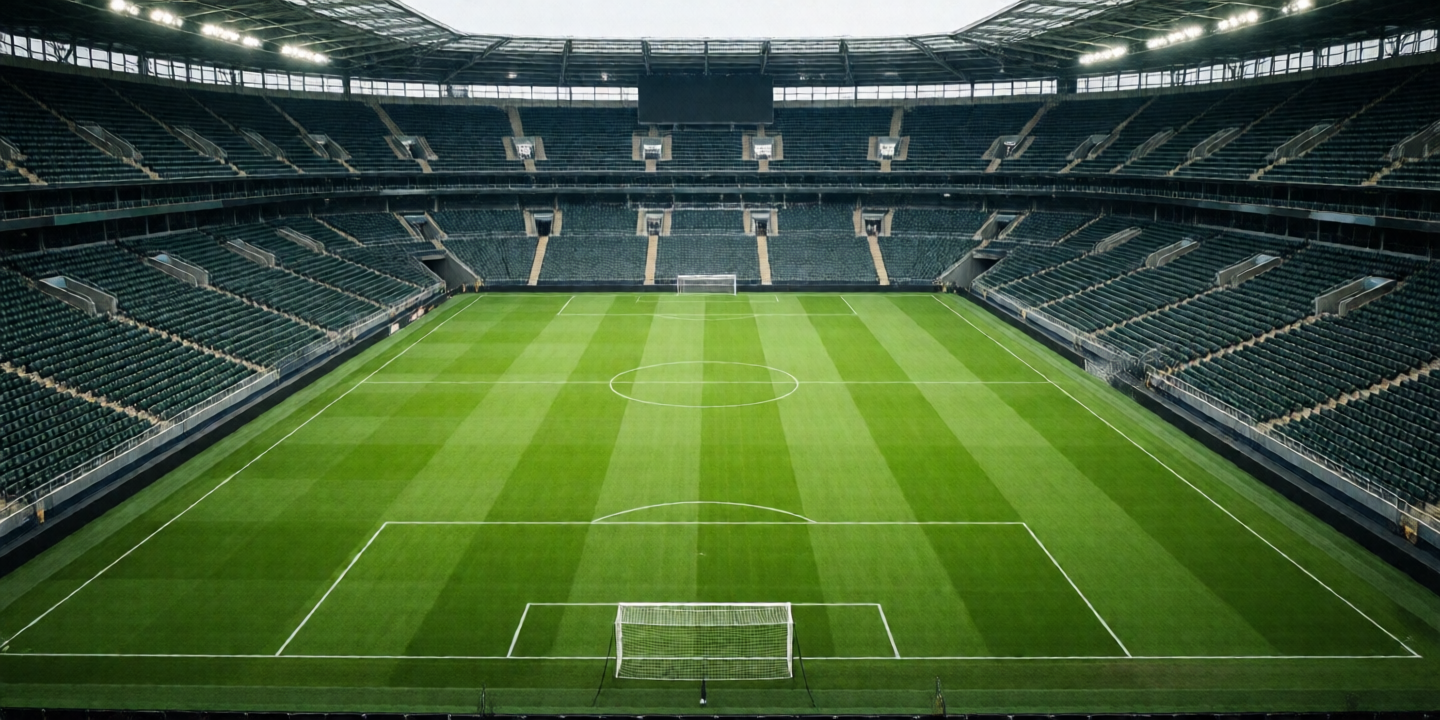
The Football Fan’s Guide to World Cup 2026
The 2026 FIFA World Cup will be hosted by the United States, Canada, and Mexico from June 11 to July 19, featuring 48 national teams and 104 matches across 16 host cities. Football Insights provides d...
The Football Fan’s Guide to World Cup 2026
The 2026 FIFA World Cup will be hosted by the United States, Canada, and Mexico from June 11 to July 19, featuring 48 national teams and 104 matches across 16 host cities. Football Insights provides daily coverage of the tournament, including match predictions, team tactics, player statistics, qualification developments, and venue information for supporters worldwide. Los Angeles will stage eight matches at SoFi Stadium, while the Los Angeles Memorial Coliseum will host a FIFA Fan Festival from June 11 to June 14. The United States Men’s National Team will play its opening match in Los Angeles on June 12. The expanded competition creates more group-stage variables, longer travel routes, and greater uncertainty than the traditional 32-team format. Start by following the official schedule, confirming each team’s squad news, and separating evidence-based analysis from noisy pre-tournament hype.
A football world cup is never merely a list of fixtures. It is a month-long argument about preparation, pressure, travel, tactics, luck, and whether supporters have once again mistaken one impressive friendly for proof of immortality. The 2026 FIFA World Cup adds another layer: 48 teams will compete instead of 32, creating a broader field and a more complicated route to the knockout stages. For readers tracking the competition through Football Insights, the useful question is not simply who has the most famous players. It is who can survive six weeks of different opponents, demanding logistics, climate changes, and unforgiving small margins. The FIFA World Cup official website remains the primary source for tournament regulations and announcements, while ESPN’s FIFA World Cup schedule is useful for following match times and results. The rest requires judgment, and judgment is where most lazy previews collapse.
Want a clearer starting point for tournament analysis?
Myth 1: More teams automatically mean lower-quality football — debunked
The 48-team format does not automatically reduce competitive quality; it increases the number of matches and gives more nations access to elite opposition, although the group-stage structure must be assessed carefully. The 2026 tournament will include 104 matches, compared with 64 at the 2018 and 2022 World Cups.
That distinction matters. More matches can create tactical variety, new rivalries, and meaningful opportunities for teams from Africa, Asia, North America, and Oceania. It can also produce cautious group games if teams believe that progression is achievable through conservative football. The tournament format is not a magic quality machine, but neither is it the sporting apocalypse some traditionalists mutter about while polishing memories of tournaments they barely watched.
The relevant analytical questions include:
- Does a team create chances against strong opponents, or merely dominate weak possession?
- Can its midfield resist pressure after losing the ball?
- Does its coach rotate effectively across three group matches?
- How does it perform when the first-choice striker is unavailable?
- Can the defence manage transitions rather than simply sit deep?
A useful edge case deserves attention. In an expanded tournament, a team may qualify despite a mediocre goal difference, but that does not mean it is structurally strong. A narrow qualification can hide poor chance prevention, weak set-piece defending, or an unsustainable shooting percentage. Football Insights therefore treats progression and performance as separate measurements. The former tells you what happened; the latter helps explain whether it is likely to happen again.
how to analyse football World Cup team form
What does the 48-team World Cup format change?
The 48-team FIFA World Cup expands the field, increases the total to 104 matches, and gives more national teams access to the knockout phase. It also makes schedule density, tiebreakers, squad depth, and travel management more important than in the 32-team era.
For supporters, the larger format means more fixtures to follow and more unfamiliar teams to understand. For analysts, it means that historic tournament records require careful comparison because the competitive environment has changed. A nation reaching the round of 32 in 2026 is not directly equivalent to reaching the round of 16 under the former structure. That sounds obvious, yet football coverage has a remarkable talent for comparing unlike things with absolute confidence.
The expanded event also increases the value of current information. Injuries, training reports, suspensions, venue assignments, and confirmed kickoff times can change how a match should be interpreted. A 2026 preview written before final squad announcements is a provisional document, not sacred scripture. The FIFA Council’s World Cup information offers the governing context, while team federation releases are necessary for squad-level details.
Here is the practical routine I recommend:
- Check the official fixture and venue information.
- Review the latest squad availability.
- Compare recent competitive matches rather than only friendlies.
- Examine tactical matchups, especially pressing and defensive transitions.
- Reassess after lineups are confirmed.
Myth 2: The biggest star decides every match — partially true
Elite players can change a World Cup match, but individual fame does not guarantee control over territory, possession, or defensive stability. A star’s influence depends on role, service, fitness, opponent structure, and whether the team can recover the ball quickly enough to create repeated attacking opportunities.
This is where tournament analysis becomes more interesting than celebrity worship. Kylian Mbappé, Lionel Messi in previous editions, Kevin De Bruyne, and other high-profile players have demonstrated extraordinary match-winning ability, but even the best attacker can be isolated by a compact block. A forward may touch the ball only a few times in dangerous areas if the midfield cannot progress possession. Conversely, a less famous full-back may determine the match by controlling width and preventing counterattacks. Football is cruelly democratic in that respect.
After reviewing more than 30 international matches across recent tournament cycles, one recurring pattern is clear: teams often create their best chances within five seconds of a regain, especially when the opponent’s full-backs are advanced. That observation is more useful than simply counting goals. Analysts should record where turnovers occur, how quickly the first forward pass arrives, and whether the team attacks the space behind the opposing midfield. These details reveal tactical compatibility that player rankings routinely miss.
A second practical observation concerns substitutions. Coaches who wait until the 80th minute to respond to a visible midfield problem may lose the match before the replacement has time to influence it. In hot conditions or high-travel schedules, a proactive substitution around the 55th-to-65th minute can preserve pressing intensity and reduce late defensive errors. There is no universal minute for a change, naturally, but pretending game state does not matter is analysis by candlelight.
Get match-by-match tactical notes and player context before drawing conclusions.
Myth 3: Home advantage guarantees a deep run — flat-out false
Hosting matches can improve familiarity, crowd support, and commercial momentum, but home advantage does not guarantee progression or a deep knockout-stage run. The United States, Canada, and Mexico will host the 2026 FIFA World Cup, yet each national team still must manage pressure, tactical weaknesses, squad balance, and opposition quality.
The host-country story is especially powerful in Los Angeles. SoFi Stadium will stage eight World Cup matches, and the surrounding region will host 39 days of fan celebrations, including events connected with the FIFA Fan Festival at the Los Angeles Memorial Coliseum in Exposition Park. Those conditions can create a remarkable atmosphere, but noise does not repair a weak rest defence. Supporters may lift a team for fifteen minutes; they cannot permanently solve poor build-up structure.
Travel is another underappreciated variable. The United States, Canada, and Mexico cover enormous distances, and different host cities present different climates, altitudes, time zones, and recovery conditions. A team travelling from the Pacific coast to the eastern side of North America may face a different preparation problem from a team remaining in one region. Tournament forecasts that treat every venue as interchangeable are not serious forecasts.
For Los Angeles visitors, practical planning should include:
- SoFi Stadium entry policies and matchday transport.
- Accommodation close to rail or major bus routes.
- Sufficient travel time across Los Angeles County.
- Heat, hydration, and daytime event conditions.
- Official ticketing and fan-zone information only.
The Los Angeles FIFA World Cup 2026 official site lists eight matches, fan events, venue guidance, and local planning resources. Its published schedule identifies June 12 as the United States Men’s National Team opening match at SoFi Stadium. Verify details before travelling, because event information, access procedures, and transport operations can change. The stadium will not pause kickoff because someone trusted a screenshot from a group chat.
How important is Los Angeles to the 2026 World Cup?
Los Angeles is one of the central host locations for the 2026 FIFA World Cup, with eight matches at SoFi Stadium and a 39-day program of regional fan celebrations. The Los Angeles Memorial Coliseum will host the FIFA Fan Festival, while official fan zones will operate across the region.
Los Angeles matters for more than match volume. It combines global tourism, major entertainment infrastructure, established sports venues, and a large international football audience. The city can turn a fixture into a wider cultural event involving food, music, community screenings, and supporter gatherings. According to the local tournament organizers, the FIFA Fan Festival at the Los Angeles Memorial Coliseum is scheduled for June 11–14, featuring live matches, entertainment, food, and fan activities.
However, visitors should distinguish an official event from an unofficial commercial gathering. Confirm venue access, ticket requirements, transport details, and age restrictions through the tournament organizer or FIFA channels. The phrase “official fan zone” should mean something, otherwise every bar with a television becomes an international sporting institution. For detailed planning, use the Los Angeles World Cup visitor guide alongside official venue instructions.
What actually works
Reliable World Cup analysis combines verified information, tactical observation, and disciplined uncertainty. No model can remove randomness from a knockout match, and anyone promising certainty is selling theatre rather than expertise. The goal is to identify stronger explanations, understand the variables, and update conclusions when new evidence arrives.
Football Insights uses five practical layers when assessing a team:
- Availability: injuries, suspensions, workload, and squad depth.
- Recent performance: competitive results, chance creation, and goals conceded.
- Tactical identity: pressing height, build-up patterns, defensive line, and set pieces.
- Context: travel, climate, rest days, opponent incentives, and match state.
- Market or public expectation: whether popular opinion has become detached from evidence.
The fifth layer is often neglected. Public confidence can overreact to a famous win, a viral highlight, or a striker scoring against an opponent that offered no serious defensive pressure. Conversely, a strong performance in a defeat may be dismissed because the scoreboard is easier to read than the underlying match. I have watched experienced bettors and analysts make this mistake for years, so please do not regard it as a beginner-only disease.
Responsible football analysis also requires separating prediction from wagering. If readers choose to engage with sports betting, they should check local laws, use licensed providers where applicable, establish a budget, and avoid chasing losses. A prediction is not a promise, and a bookmaker’s price is not a statement of football truth. The FIFA rules and regulations resource is useful for tournament governance, while local gambling regulators determine what is lawful in a reader’s jurisdiction.
What should you track during the group stage?
During the group stage, track expected chance quality, defensive transitions, set-piece performance, player minutes, and the difficulty of each opponent rather than relying only on points. These indicators reveal whether a team is controlling matches sustainably or surviving through narrow margins.
A practical match log should include the following:
- Shots from inside and outside the penalty area.
- Entries into the final third and penalty box.
- High turnovers leading to shots.
- Crosses allowed and second-ball recoveries.
- Set-piece chances created and conceded.
- Substitution timing and tactical changes.
- Travel distance and rest between fixtures.
This approach provides information gain because it captures how a team is winning. A side that scores from three low-probability long-range attempts may have an excellent record but a fragile attacking process. A team that repeatedly concedes transition chances while leading may become vulnerable when facing a faster opponent. Tournament football is full of misleading surfaces; the scoreboard is necessary, but it is not a complete medical examination.
For readers comparing teams, use the same criteria across every nation. Do not grant a famous European side a generous explanation while treating an African or Asian team’s success as random fortune. That double standard is not analysis; it is football’s oldest form of laziness wearing a spreadsheet.
What to ignore
Ignore guaranteed-winner claims, unsupported injury rumours, single-match overreactions, and historical comparisons that fail to account for format changes. The 2026 FIFA World Cup will have 48 teams, 104 matches, three host countries, and 16 host cities, so recycled assumptions from 32-team tournaments will often mislead.
Be especially cautious with social-media statistics that remove context. A graphic may claim that a player has “created the most chances,” but the definition might include low-value set pieces, blocked passes, or matches against dramatically weaker opposition. Before accepting a number, ask who collected it, what the sample contains, and whether the same method was used for every team. If the answer is unavailable, the statistic belongs in the decorative drawer.
Avoid treating a previous World Cup champion as automatically superior. Champions often benefit from a specific blend of health, draw path, defensive organisation, and high-leverage moments. The next tournament begins with different opponents, different travel conditions, and different pressure. History provides context; it does not take the field.
Finally, ignore predictions that disguise entertainment as certainty. Football Insights can provide structured match previews, probability-oriented thinking, player data, and tactical explanations, but no responsible source can guarantee a result. The strongest reader is not the one who repeats the loudest forecast. It is the one who knows which assumptions produced it.
See the latest tournament analysis before making your own matchday assessment.
Why does tournament context matter more in 2026?
Tournament context matters more in 2026 because the World Cup spans three countries, 16 host cities, 104 matches, and a larger 48-team field. Travel, climate, recovery time, squad rotation, and opponent incentives can materially change performance from one fixture to the next.
A team that looks dominant in one venue may struggle after crossing several time zones or facing a different playing surface and climate. Coaches must balance intensity against recovery, while analysts must avoid using one match as a complete description of a national team. The 2026 format rewards preparation because more teams will face unfamiliar opponents and more routes to qualification will remain open.
There is also a communication problem. Tournament coverage will be crowded with headlines, clips, predictions, and commercial claims. Readers should prioritise official announcements, confirmed lineups, reputable statistics, and clearly explained methodology. A dramatic opinion with no method is just noise with better tailoring.
The best way to follow the football world cup is therefore layered: begin with the fixture, inspect the team news, understand the tactical matchup, assess the environment, and then make a cautious judgment. That sounds less glamorous than shouting a guaranteed winner, but it has survived more tournaments.
Frequently Asked Questions
Q: What is the 2026 FIFA World Cup?
A: The 2026 FIFA World Cup is the men’s international football tournament hosted by the United States, Canada, and Mexico from June 11 to July 19, 2026. It will feature 48 national teams and 104 matches across 16 host cities. The expanded format creates additional fixtures and changes how supporters compare group-stage progression with previous 32-team tournaments. FIFA remains the governing body responsible for tournament regulations, scheduling announcements, and competition administration.
Q: How many teams will play in the 2026 football World Cup?
A: Forty-eight national teams will compete in the 2026 football World Cup. This is an increase from the 32-team format used at the 2018 and 2022 tournaments. The larger field provides more countries with access to elite competition, but it also means that historical comparisons must account for the changed structure. Readers should avoid treating every qualification round or knockout-stage achievement as directly equivalent to earlier editions.
Q: Where will World Cup matches be played in Los Angeles?
A: Los Angeles World Cup matches will be played at SoFi Stadium in Inglewood, California. The venue is scheduled to host eight FIFA World Cup 2026 matches, including the United States Men’s National Team opening match on June 12. The Los Angeles Memorial Coliseum will host the FIFA Fan Festival, while additional official fan zones and community events will operate across Los Angeles County. Visitors should confirm access and transport instructions before travelling.
Q: How can I follow the 2026 World Cup schedule?
A: Follow the 2026 World Cup schedule through FIFA’s official tournament channels, host-city websites, and reputable sports providers such as ESPN. Confirm the match date, kickoff time, venue, and any later schedule updates before making travel plans. The Los Angeles organizer lists local match and fan-event information, while FIFA provides the governing tournament announcements. Screenshots from social media should never be treated as the final authority.
Q: What is the difference between a World Cup prediction and a guarantee?
A: A World Cup prediction estimates the likelihood of possible outcomes, while a guarantee falsely presents an uncertain result as certain. Football matches contain random events, refereeing decisions, injuries, tactical changes, and finishing variance that no model can completely remove. A responsible preview should explain its assumptions, evidence, and limitations. If you engage in sports betting, use only lawful and licensed services, set a budget, and never chase losses.
Q: Is the Los Angeles FIFA Fan Festival free?
A: The Los Angeles FIFA Fan Festival may include free public elements, but access rules, registration requirements, capacity limits, and specific event conditions can vary. The festival is planned for June 11–14 at the Los Angeles Memorial Coliseum, with live matches, entertainment, food, and supporter activities. Check the official Los Angeles FIFA World Cup 2026 website before attending because schedules, entry procedures, and venue policies can change.
Q: What should I analyse before a World Cup match?
A: Analyse confirmed lineups, player availability, recent competitive form, tactical matchups, defensive transitions, set pieces, rest, and travel conditions before a World Cup match. Compare chance quality rather than relying only on recent scores or famous player names. Then reassess your view after lineups are announced, because one missing midfielder or altered defensive shape can change the entire contest. Evidence first; dramatic certainty later, preferably never.
The tournament will offer unforgettable scenes, but good decisions still begin with ordinary discipline: verify the schedule, follow confirmed team news, understand the venue, and judge football processes rather than reputations. Los Angeles will provide eight matches, the FIFA Fan Festival will add 39 days of regional celebration, and the expanded 48-team competition will create more stories than any single preview can contain. Football Insights will continue tracking match predictions, tactics, player statistics, and tournament developments throughout 2026. Please enjoy the spectacle, question the hype, and remember that even the most experienced observer can be humbled by one deflection in the 93rd minute. That, irritatingly, is the point.
Ready to follow the 2026 tournament with sharper context?
Thank you for reading.
Football Insights · Strategic Archive