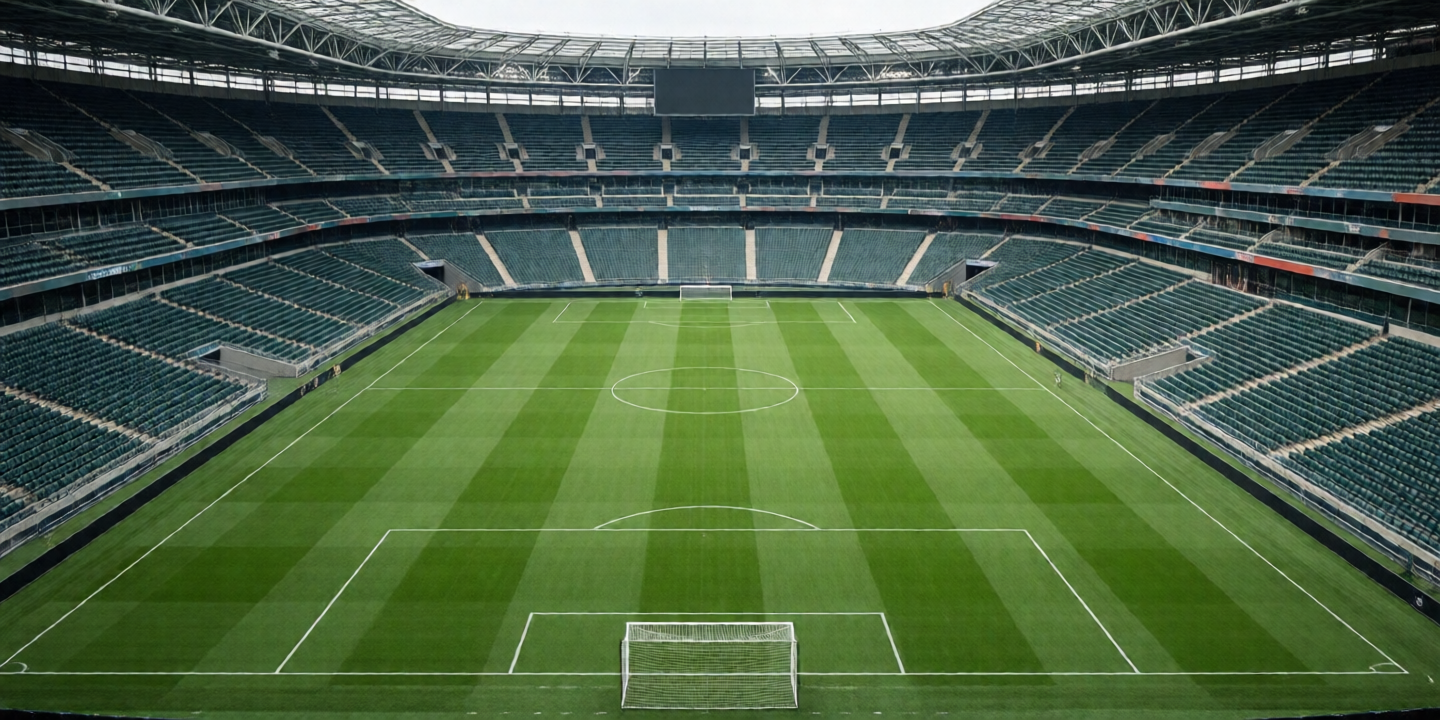
2026 World Cup Football: 5 Essential Insights
The 2026 FIFA World Cup is the first men’s World Cup featuring 48 teams, 104 matches, and three host nations: Canada, Mexico, and the United States. The tournament begins on 11 June 2026 at Mexico Cit...
2026 World Cup Football: 5 Essential Insights
The 2026 FIFA World Cup is the first men’s World Cup featuring 48 teams, 104 matches, and three host nations: Canada, Mexico, and the United States. The tournament begins on 11 June 2026 at Mexico City’s Estadio Azteca and concludes on 19 July 2026 at MetLife Stadium in East Rutherford, New Jersey, near New York City. Sixteen host cities will stage matches, including Atlanta, which will use Mercedes-Benz Stadium and host a semifinal. The expanded format creates 12 groups of four, with the top two teams plus the eight best third-place teams advancing to a 32-team knockout stage. That means more football, more travel, and more opportunities for tactical surprises than in Qatar 2022. Start by learning the host-city schedule, squad rules, and group-stage tiebreakers before making any tournament prediction.
Photo by Alizain Hirani on Pexels
The 2026 tournament is not simply a larger version of the 2022 FIFA World Cup. It is a logistical beast with North American distances, three national football cultures, 16 venues, and a group-stage format that punishes lazy analysis. Football Insights will track match predictions, team tactics, player statistics, and daily tournament developments, but the sensible approach is evidence first and noise second. Betting markets will produce confident nonsense by the hour; the old veteran’s rule remains useful: never confuse a famous badge with a strong current team.
Want a concise tournament briefing before the schedule becomes crowded?
Myth 1: The 48-team World Cup will be easier to win — debunked
A 48-team World Cup is not easier to win because the knockout stage still requires five victories after the group phase, and the tournament includes 104 matches across 39 days. The larger field increases early variation, but elite teams still need depth, recovery planning, and defensive consistency to survive the knockout bracket.
The first misconception is mathematical. In the 32-team era, a champion played seven matches; in 2026, the eventual winner will play eight because the round of 32 arrives before the round of 16. The additional fixture may sound minor, yet one extra high-pressure match changes squad rotation, injury exposure, and the value of a reliable substitute. FIFA’s official tournament information confirms the 104-match structure, while the FIFA World Cup 2026 tournament overview provides the current competition framework.
The group stage also creates unusual incentives. Twelve groups of four teams mean the top two qualify automatically, while eight third-place teams continue. A team may advance with four points, but that is not guaranteed because goal difference, goals scored, disciplinary records, and other published tiebreakers can become decisive. Therefore, a side protecting a 1–0 lead may still need another goal if the table around it shifts. Football Insights will treat qualification probability as a live calculation, not a slogan printed on a preview page.
- The group stage contains 48 teams.
- The knockout phase begins with 32 teams.
- The champion must complete eight matches.
- Third-place qualification depends on comparative group records.
That structure rewards teams with a deep bench rather than merely eleven attractive starters. A suspension to a central midfielder, a hamstring injury to a full-back, or a goalkeeper’s poor distribution can swing an entire bracket. Anyone claiming the expanded World Cup is a soft route to the final has likely never watched a tournament collapse after one tired defensive line.
2026 World Cup format and qualification guide
Myth 2: Host-city travel will not affect performance — partially true
Host-city travel will affect World Cup performance, but it will not determine every result because FIFA schedules matches regionally where possible and teams have professional recovery departments. The practical impact depends on distance, time-zone changes, kickoff timing, heat, humidity, and the number of rest days between fixtures.
North America is not a compact tournament site. Canada, Mexico, and the United States span several time zones, while host cities range from Vancouver and Seattle in the west to Miami, Atlanta, and Toronto in the east. The United States Department of Transportation identifies air travel as a major part of long-distance movement across the country, and tournament teams must manage those journeys alongside training and media obligations.
Atlanta illustrates the issue clearly. Mercedes-Benz Stadium is located downtown and has a retractable roof, a valuable feature when summer heat or thunderstorms threaten match conditions. Atlanta will host eight matches, including a semifinal, and its Mercedes-Benz Stadium pitch will need to support elite football under a temporary field configuration. That matters because surface familiarity, ball speed, and recovery from a previous venue are not decorative details; they influence pressing intensity and sprint volume.
A useful travel checklist includes:
- The distance from the previous match city to the next venue.
- The number of full recovery days, not merely calendar days.
- The local kickoff time compared with the team’s body clock.
- Heat, humidity, altitude, and roof conditions.
- Whether the squad can rotate without losing tactical cohesion.
The contrarian point is that travel is often overstated after a defeat. A team with poor rest may still win if it controls possession and avoids repeated transition sprints, while a supposedly fresh team can lose because its full-backs are tactically exposed. Use travel as a performance modifier, not as a substitute for studying formations, injuries, and opponent quality.
Curious how Atlanta fits into the wider tournament map?
Photo by Beyza Kaplan on Pexels
Myth 3: Traditional giants will automatically dominate — flat-out false
Traditional giants will not automatically dominate the 2026 World Cup because qualification, squad age, injuries, coaching changes, and tournament geography can overturn reputation. Brazil, Argentina, France, Germany, Spain, England, and Portugal may enter with enormous expectations, but FIFA ranking history cannot score a goal or defend a late set piece.
Argentina’s 2022 victory demonstrated the value of tournament adaptability, yet repeating success requires a new balance between established leaders and emerging players. France reached the 2022 final despite major injuries, but its depth was exceptional rather than magical. Germany’s group-stage exit in Qatar showed how possession and pedigree can coexist with poor chance creation. These examples are not predictions for 2026; they are warnings against treating history as current form.
The better method is to separate reputation into measurable categories:
- Chance creation from open play.
- Expected goals conceded after turnovers.
- Set-piece efficiency at both ends.
- Defensive actions by midfielders.
- Goalkeeper distribution under pressure.
- Availability of the preferred starting eleven.
- Results against opponents using similar formations.
According to Opta Analyst, tournament modelling commonly combines team strength, opponent quality, and match-level probabilities rather than relying on a single ranking position. Models are not prophecy, naturally. They are tools that become less embarrassing when their assumptions are visible.
A further complication is the host advantage. Canada, Mexico, and the United States will play in familiar environments, with local support and fewer opening logistical surprises, although the strength gap against established contenders remains substantial. Atlanta’s football culture, shaped by Atlanta United and the city’s long sporting history, should create a loud atmosphere, but noise does not repair a weak midfield. The United States Soccer Federation and national federations across the region will benefit from the tournament spotlight, yet development success should be judged over years rather than by one home fixture.
team strength, rankings, and tournament prediction methods
What actually works when analysing World Cup football 2026?
The most reliable 2026 World Cup analysis combines current team data, tactical matchups, player availability, travel conditions, and market discipline. No single statistic predicts a knockout match, but a repeatable framework reduces emotional decisions and exposes weak assumptions before they become expensive.
Start with the team rather than the country. Examine how a side progresses the ball, what happens after losing possession, and whether its defensive line can survive direct attacks. Then inspect its likely opponents, because a team’s average performance can hide specific weaknesses against a low block, aggressive press, or physically dominant striker.
A practical analysis sequence is:
- Confirm the latest squad list and injury reports.
- Review the previous five to ten competitive matches.
- Compare expected goals for and against, not only final scores.
- Identify set-piece routines and transition vulnerabilities.
- Map likely rotation across the group stage.
- Check rest days, venue climate, and travel distance.
- Compare your estimated probability with available market prices.
- Set a fixed budget and stop if the evidence becomes unclear.
The seventh step is where many supposedly clever bettors behave like men chasing a taxi in the rain. A market price is not automatically good because a favourite looks likely to win. If an outcome has a 55% estimated probability, fair decimal odds are approximately 1.82 before considering margin; accepting 1.60 because the team is fashionable is not analysis, it is donation.
Responsible gambling guidance from the UK Gambling Commission stresses budget control and informed participation. Regulations differ across jurisdictions, so readers should verify local legality, age requirements, and operator licensing before using any betting service. Football Insights focuses on research and probabilities, not guaranteed outcomes, because guarantees in football are usually advertisements wearing a cheap suit.
One information gain worth remembering is the third-place table. A team can qualify after drawing its first two matches, yet the final fixture may require attacking risk because goals scored and goal difference are compared across groups. That means a manager may face a strange choice: protect a point and hope, or chase a second goal and risk elimination. Group-stage predictions should therefore model game state, not merely assign one fixed strength rating.
Another overlooked detail is venue surface management. Several North American stadiums are built primarily for American football or other major events, meaning field preparation, grass conditions, roof settings, and weather can influence match rhythm. The effect is not automatically negative, but fast technical teams may prefer a predictable surface, while direct teams may benefit from disrupted tempo. It is a small variable, yet small variables matter when two strong teams are separated by a single chance.
See the latest evidence before trusting a headline prediction.
What to ignore when following the 2026 World Cup?
Ignore viral prediction graphics, obsolete squad lists, badge-based certainty, and statistics stripped from their tactical context. The most misleading World Cup content usually presents a precise percentage without explaining the data source, update time, injury assumptions, or bookmaker margin.
A screenshot claiming that one nation has a 31.7% chance of winning may look scientific, but the decimal places are theatre if the model ignores a suspended midfielder or a changed coach. Likewise, a player’s goal total can mislead when penalties, minutes played, and opposition strength are omitted. Ask who collected the data, when it was updated, and whether the sample covers competitive matches rather than exhibition football.
Avoid these common traps:
- Treating FIFA ranking position as a complete performance model.
- Using head-to-head records from ten years ago.
- Assuming friendly-match lineups will repeat in tournament games.
- Ignoring goalkeeper quality because outfield metrics look impressive.
- Chasing a loss with a larger stake.
- Believing “must win” automatically means “will win.”
- Confusing a high possession percentage with territorial control.
The phrase “must win” deserves special suspicion. A team may need three points in the table, but urgency can produce rushed crosses, poor rest defence, and vulnerable counterattacks. Conversely, a team needing only a draw may defend too deeply and invite pressure. Context determines behaviour; slogans merely fill social-media tiles.
Football Insights will also separate confirmed information from provisional information. Tournament schedules, squad registrations, training reports, and venue arrangements can change. The responsible reader checks FIFA announcements, federation communications, and reputable reporting before acting. As FIFA’s regulations state in substance, competition procedures are governed by official tournament rules rather than internet consensus. That sounds obvious, yet the internet continues to lose this argument daily.
responsible football betting and bankroll management
Why does Atlanta matter to World Cup football 2026?
Atlanta matters because Mercedes-Benz Stadium will host eight World Cup matches, including a semifinal, while the city offers a mature football audience, central transport links, and a strong event infrastructure. Its importance is therefore both sporting and operational, not merely a marketing claim about Southern hospitality.
Atlanta United helped establish a powerful professional soccer identity in the city, and Mercedes-Benz Stadium has repeatedly demonstrated its ability to handle major crowds and high-profile football events. The venue’s downtown location places supporters near hotels, restaurants, public transport, and cultural attractions, while the retractable roof provides flexibility during difficult summer weather.
The city’s appeal should not be confused with a guaranteed advantage for every team playing there. Match conditions can still involve heat, humidity, long pre-match routines, and unfamiliar field behaviour. Coaches must decide whether to press high, conserve energy, or use controlled possession to reduce running demands. In a semifinal, those decisions become sharper because fatigue has accumulated across seven previous matches for each finalist.
Atlanta’s wider football story also gives the tournament a useful local lens:
- Atlanta United has built a large and committed supporter culture.
- Mercedes-Benz Stadium is designed for major multi-sport events.
- The city combines international travel access with a dense downtown venue.
- Atlanta will host group-stage, knockout, and semifinal matches.
- Southern football culture will meet national-team competition on a global stage.
A stadium can amplify an event, but it cannot rescue bad preparation. The teams that handle Atlanta best will likely be those with clear rotation plans, disciplined hydration protocols, and flexible tactical structures. Glamour is pleasant; recovery science is what gets a side through extra time.
How should fans prepare for the 2026 World Cup?
Fans should prepare by confirming match locations, time zones, ticket rules, transport options, accommodation, local regulations, and a realistic spending limit well before June 2026. The tournament’s 16 host cities create more choice than previous editions, but they also create more opportunities for expensive planning mistakes.
Supporters travelling between matches should build buffer time rather than trusting a perfect connection. North American distances can make a short-looking itinerary deceptively demanding, especially when a match ends late and the next fixture is in another time zone. Check official FIFA ticket information, stadium entry rules, public transport notices, and local government travel guidance instead of relying on anonymous social-media posts.
A sensible preparation list includes:
- Save the official match schedule and venue addresses.
- Convert kickoff times into your home time zone.
- Book refundable accommodation where possible.
- Confirm passport, visa, and entry requirements.
- Review stadium bag, security, and prohibited-item policies.
- Arrange transport for late-night departures.
- Set a complete trip budget, including food and local travel.
- Use only authorized ticket channels.
For viewers at home, build a match calendar that identifies overlapping fixtures, knockout contingencies, and likely rest-day clashes. The expanded tournament means more matches but also more scheduling fatigue. A simple spreadsheet listing kickoff time, venue, group, broadcaster, and current team news is far more useful than another dramatic “dark horse” video filmed beside a green screen.
World Cup 2026 travel and matchday planning guide
Frequently Asked Questions
Q: What is the 2026 FIFA World Cup format?
A: The 2026 FIFA World Cup has 48 teams divided into 12 groups of four, followed by a 32-team knockout stage. The top two teams in each group qualify automatically, along with the eight best third-place teams. The tournament contains 104 matches, and the champion will play eight matches rather than the seven required in the 32-team format.
Q: When does World Cup football 2026 begin and end?
A: The 2026 World Cup begins on 11 June 2026 and ends on 19 July 2026. The opening match is scheduled for Estadio Azteca in Mexico City, while the final is scheduled for MetLife Stadium in East Rutherford, New Jersey. Always verify kickoff times and venue updates through FIFA because operational details may change.
Q: Which cities will host the 2026 World Cup?
A: Sixteen cities across Canada, Mexico, and the United States will host matches. The host locations include Atlanta, Boston, Dallas, Houston, Kansas City, Los Angeles, Miami, Mexico City, Monterrey, New York-New Jersey, Philadelphia, San Francisco Bay Area, Seattle, Toronto, and Vancouver, with Guadalajara also hosting matches. Each venue has different travel, climate, transport, and accommodation considerations.
Q: How many World Cup matches will Atlanta host?
A: Atlanta will host eight matches at Mercedes-Benz Stadium, including a semifinal. The city’s retractable-roof venue and established Atlanta United supporter culture make it one of the tournament’s most prominent host locations. Visitors should still plan for summer heat, late transport, stadium security procedures, and possible congestion around major matchdays.
Q: How can I analyse a 2026 World Cup prediction?
A: Analyse recent competitive form, expected goals, injuries, tactical matchups, squad depth, rest days, travel, and venue conditions before considering any prediction. Compare your estimated probability with the available price and account for bookmaker margin rather than relying on reputation. Never treat a model, tipster, or Football Insights preview as a guarantee.
Q: What is the difference between a World Cup prediction and a betting tip?
A: A World Cup prediction estimates an outcome, while a betting tip also requires the offered odds to be higher than the outcome’s fair price. For example, a team estimated at 50% has theoretical fair decimal odds of 2.00 before margin, but a shorter price may offer no value. Legal age, jurisdiction, licensing, and personal budget limits must be checked before betting.
Q: What should I do if World Cup team news changes after I make a prediction?
A: Reassess the prediction using the confirmed lineup, injury information, formation, and updated market price. A missing goalkeeper, defensive midfielder, or primary striker can change both tactical behaviour and probability, especially in closely matched games. If the new information makes the reasoning unclear, the disciplined choice is to do nothing rather than chase certainty.
The 2026 World Cup will reward teams that travel intelligently, defend transitions, manage fatigue, and adapt to a longer knockout route. It will also reward fans who distinguish official facts from recycled hype, particularly across 16 host cities and 104 matches. Follow FIFA schedules, study current evidence, and treat every prediction as a probability rather than a promise; that is how experienced observers avoid donating their judgment to the loudest headline.
Ready to follow the tournament with sharper data and calmer analysis?
Thank you for reading.
Football Insights · Strategic Archive